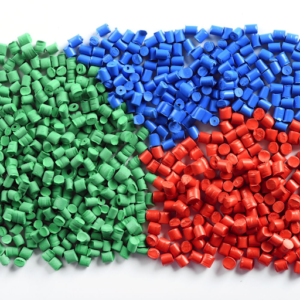
Sourcing a masterbatch is a long-term decision. The supplier you choose affects your colour consistency, additive performance, and the reliability of every production run. With a crowded market, buyers often struggle to separate capable partners from those that simply quote the lowest price.
This guide breaks down the criteria that genuinely matter when evaluating top plastic master batch manufacturers in India, so you can assess suppliers on substance rather than sales claims.
Start with Quality Control
Consistency is the foundation of a good masterbatch supplier. A pigment or additive that varies from batch to batch forces you to re-adjust your process constantly, which raises scrap rates and cost.
Ask how the manufacturer controls:
- Raw material selection and incoming inspection
- Additive and pigment loading accuracy
- Dispersion quality
- Batch-to-batch colour and property consistency
A manufacturer confident in its quality systems should be willing to explain how consistency is maintained and documented.
Technical Support and Formulation Capability
The strongest suppliers act as technical partners. They help you select the right grade, troubleshoot processing issues, and adapt formulations when your requirements change.
This matters especially with more demanding products. A reactive additive such as a peroxide masterbatch, used to adjust polymer rheology or promote crosslinking, cannot simply be dropped into any process. It needs a supplier who understands decomposition temperature, carrier compatibility, and how the additive behaves during processing. The presence of that depth signals a manufacturer capable of handling both routine color work and specialized additive chemistry.
Customization and Range
Your needs are rarely generic. Look for manufacturers who can tailor colour, additive packages, and carrier resins to your polymer and application. A broad product range, spanning colour, white, black, additive, and filler masterbatches, indicates formulation flexibility.
Consider whether the supplier covers the polymers you use and the industries you serve, from packaging and pipes to wire and cable.
Documentation and Compliance
Reliable documentation reduces risk. Technical data sheets, handling guidance, and clear specifications help you use a product correctly and meet your own customers' requirements. Where regulatory compliance is relevant to your market, discuss it directly with the supplier and confirm what applies to your application rather than assuming.
Consistency and Supply Reliability
Even excellent products lose value if delivery is unpredictable. Assess the manufacturer's ability to scale with your volumes and maintain lead times. Reliability across repeat orders is often what distinguishes a dependable partner over time.
A Practical Evaluation Checklist
| Criterion | Question to ask |
| Quality control | How is batch consistency maintained? |
| Technical support | Will you help with grade selection and trials? |
| Customisation | Can you tailor to my polymer and application? |
| Range | Do you cover colour, additive, and filler grades? |
| Documentation | What technical data do you provide? |
| Reliability | Can you meet my volumes and lead times? |
Avoiding Common Sourcing Mistakes
Buyers sometimes choose on unit price alone, then absorb hidden costs from inconsistency, rework, or poor support. Others skip sampling and discover compatibility issues in production. A short evaluation and trial period usually saves far more than it costs.
Conclusion
Evaluating top plastic master batch manufacturers in India comes down to consistency, technical depth, customization, and reliability rather than price alone. Suppliers who can handle both everyday colour work and specialized additive chemistry tend to make stronger long-term partners. When shortlisting vendors, review each supplier's masterbatch and compound manufacturing capabilities and request trials before committing, so your decision rests on demonstrated performance.
Frequently Asked Questions
How do I evaluate a masterbatch manufacturer's product quality?
Review technical specifications, raw material quality, consistency between batches, and performance in actual production trials. Certifications and quality-control processes also help assess reliability.
What factors should I consider when choosing a masterbatch supplier?
Consider product quality, formulation expertise, customization options, technical support, production capacity, lead times, pricing, and consistency.
Can a manufacturer develop customized masterbatch formulations?
Yes. Many manufacturers develop customized formulations based on the polymer, application, required properties, dosage, and processing conditions.
Does masterbatch compatibility affect final product quality?
Yes. Poor compatibility can cause dispersion problems, surface defects, uneven coloration, and inconsistent performance.
How do I compare masterbatch manufacturers on price?
Compare the cost per finished product, not only the price per kilogram of masterbatch. Dosage rate, concentration, yield, consistency, and production efficiency also affect the actual cost.
What certifications should I check before selecting a manufacturer?
Depending on your application, check relevant quality, environmental, food-contact, safety, and industry-specific certifications. Always verify that certifications apply to the specific product and application.
How important is production capacity?
Production capacity matters when you need consistent supply at scale. A suitable manufacturer should be able to maintain quality and meet your required volumes and delivery schedules.
Can masterbatch manufacturers support large-volume orders?
Many established manufacturers support bulk orders, but you should confirm production capacity, minimum order quantities, lead times, and supply continuity before placing an order.