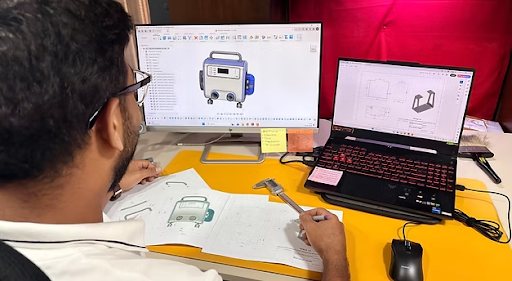
A good pet product needs to work for two users at once: the animal interacting with it and the owner choosing, handling, cleaning, or storing it. A bed, feeder, carrier, toy, or activity product must therefore combine comfort, practical functionality, durability, and visual appeal. For a pet products design studio, understanding these different expectations is essential to developing products that fit naturally into everyday routines. Thoughtful industrial design brings together ergonomics, materials, usability, aesthetics, CAD modelling, prototyping, and manufacturing considerations to turn simple pet-care ideas into purposeful physical products.
Understanding Pet Product Design From the User's Perspective
Pet product design begins with understanding how an animal will interact with a product and how its owner will use it. Size, movement, behaviour, comfort, accessibility, and safety can influence the shape and structure of a product. At the same time, owners may value easy handling, cleaning, storage, durability, and an appearance that complements their living environment.
This makes pet products different from ordinary consumer goods. Designers need to consider the animal's physical interaction as well as the human experience surrounding the product. A well-developed solution should feel intuitive to the owner while providing an appropriate and comfortable experience for the pet.
Balancing Comfort With Everyday Function
Comfort and functionality should work together rather than compete. A product may look attractive, but if it is difficult for a pet to access or inconvenient for an owner to maintain, its visual appeal alone cannot make it successful. Industrial design can help balance these requirements through careful consideration of form, dimensions, materials, interaction, and intended use.
- Pet size and proportions
- Comfortable physical interaction
- Simple owner handling
- Durable material choices
- Practical maintenance
Considering these elements early can help create products that are useful beyond their initial appearance. The objective is to make everyday pet-care activities easier while keeping the product comfortable and appropriate for regular use.
Designing the Form and Experience
Once the basic requirements are established, designers can explore how the product should look, feel, and function. Conceptual design and ideation provide opportunities to investigate different forms, layouts, interactions, and visual directions before selecting a suitable concept.
-
Ergonomic Interaction
Ergonomics considers how pets interact physically with products while also addressing the owner's handling experience. Dimensions, surfaces, access points, and positioning can influence comfort and usability.
-
Material Selection
Materials can affect durability, weight, texture, appearance, and maintenance. Selecting suitable materials helps balance the practical requirements of repeated use with the desired product character.
-
Visual Appeal
Pet products increasingly form part of household environments, making appearance an important consideration. Colour, form, finish, and proportions can help products complement their surroundings without compromising function.
-
Ease of Maintenance
Products used regularly need practical cleaning and maintenance considerations. Accessible surfaces, suitable construction, and thoughtful component design can make routine care easier for owners.
-
Adaptability
Different pets have different sizes, behaviours, and environments. Flexible or adaptable design approaches can help products accommodate varied household and usage requirements.
Using Prototyping to Refine Pet Products
A digital model can communicate the intended shape, but a physical prototype allows designers to experience the product more directly. Three-dimensional prototypes can help evaluate proportions, interaction, accessibility, and overall usability before larger production commitments are made.
Physical testing can reveal details that are difficult to judge on a screen. A handle may feel uncomfortable, an opening may be too narrow, or a product may occupy more space than expected. Each observation provides useful information for refining the design.
Connecting Pet Product Design With Manufacturing
A promising concept also needs to be realistic to manufacture. Design for Manufacturing considers form, function, materials, and production constraints during development. This helps ensure that the final design is not only attractive and usable but also practical to produce.
CAD modelling and engineering can support this transition by defining components, dimensions, mechanisms, and manufacturing considerations. Production-ready files, vendor coordination, tooling, quality checks, and scaling can further connect the refined product with manufacturing requirements.
Practical Elements of a Successful Pet Product
A strong pet product combines the needs of animals and owners without introducing unnecessary complexity. Every element should contribute to the intended experience, whether the product is designed for feeding, resting, movement, transportation, play, or another everyday activity.
- Comfortable interaction
- Intuitive operation
- Appropriate proportions
- Durable construction
- Easy maintenance
When these elements are considered together, the product can become more practical for owners and more suitable for pets. A balanced approach also allows aesthetics to support functionality instead of distracting from it.
Choosing a Pet Product Design Partner
Selecting a design partner requires looking beyond attractive concepts or finished product images. Businesses should consider whether the team understands industrial design, ergonomics, CAD development, prototyping, engineering, and manufacturing requirements.
Experience across different product categories can also be valuable because it exposes designers to varied user expectations, materials, production methods, and development challenges. A partner that can carry an idea through several stages provides greater continuity as the product evolves.
Moving From Pet Product Ideas to Refined Solutions
Developing a successful pet product is a process of continuous refinement. Research establishes the requirements, ideation explores possibilities, industrial design shapes the product, engineering addresses technical details, and prototyping provides opportunities for physical evaluation. Manufacturing considerations then help prepare the refined concept for production.
Keeping pets and owners at the centre of these decisions can lead to products that are more useful, comfortable, attractive, and practical. The strongest results come when aesthetics are developed alongside function rather than added after the essential design decisions have already been made.
Conclusion
Pet product design requires a careful balance between comfort, functionality, durability, usability, and style. From understanding pet behaviour to selecting materials, developing CAD models, creating prototypes, and considering manufacturing feasibility, each stage can influence the final experience.
For businesses looking for the best design studio in India, Studio701 offers industrial design, engineering, prototyping, and production support across diverse product categories, including pet products. With its focus on meaningful, manufacturable, and human-centred solutions, Studio701 can help transform pet product concepts into thoughtful and production-ready designs.