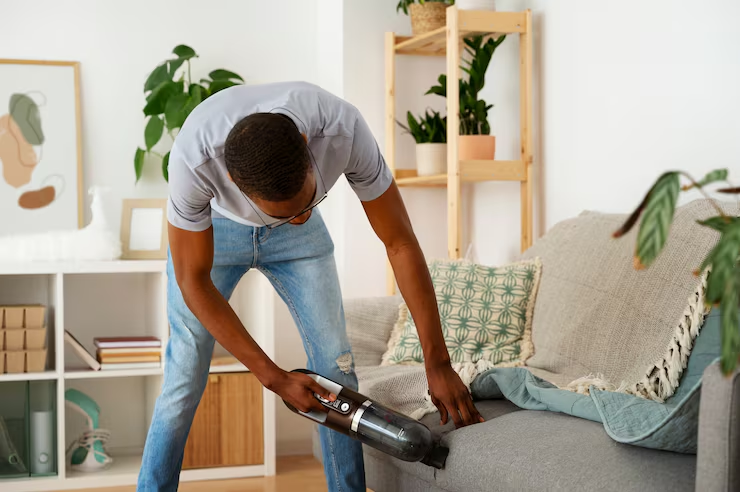
Most households vacuum their sofas occasionally, wipe down visible spills, and consider the job done. It's an understandable approach — upholstery doesn't show dirt the way floors do, and the signs of a sofa that genuinely needs attention can be subtle until they're not.
But sofas accumulate significantly more than surface-level debris. Understanding what's actually building up in upholstered furniture — and what professional cleaning does that home care can't — changes the calculation on how often this kind of maintenance is worth investing in.
What Builds Up in Upholstery Over Time
A sofa that sees daily household use is collecting several layers of material simultaneously. Dead skin cells shed from the body accumulate continuously and become a food source for dust mites. Pet dander embeds into fabric fibers even in households that keep pets off furniture. Body oils from regular contact transfer from skin to fabric and create a sticky substrate that traps additional particles over time.
Beyond biological material, general dust settles into the weave of upholstery fabric consistently. Food particles and drink residue from casual household use create organic material that can support mould growth in the right conditions — particularly in a damp climate like the West Midlands.
The result is upholstery that looks reasonably clean on the surface but carries a significantly higher biological load than most households are aware of. This matters particularly for households with children, elderly residents, or anyone with respiratory conditions or allergies.
Why Home Cleaning Has Limits
Over-the-counter upholstery sprays and foam cleaners address surface-level soiling effectively. What they don't do is extract the material embedded in the fabric pile and the padding beneath it.
Vacuuming removes loose surface debris but lacks the suction power to pull embedded particles from within the fabric structure. DIY steam cleaning without professional equipment can partially address deeper soiling but often doesn't achieve the extraction necessary to fully remove moisture and residue — which, if left in the padding, can accelerate mould development rather than prevent it.
Fabric type adds another layer of complexity. Different upholstery materials — microfibre, velvet, cotton, linen blends, synthetic weaves — each respond differently to water, cleaning agents, and agitation. Applying the wrong approach to a sensitive fabric can cause shrinkage, colour bleeding, distortion, or watermarking that is difficult to reverse.
What the Professional Process Involves
A professional upholstery cleaning process begins with fabric assessment — identifying the material type and its specific care requirements before any cleaning agent is applied. This step determines the appropriate method: hot water extraction, dry cleaning, low-moisture foam application, or specialist solvent treatment for delicate materials.
Pre-treatment of stains and soiled areas follows, using products formulated for the specific fabric and stain type. The cleaning itself — whether wet or dry — is then performed with commercial-grade equipment that produces significantly more extraction power than consumer machines.
For wet methods, post-cleaning drying is managed carefully — either through forced air drying or with professional-grade dryers — to ensure the padding dries fully rather than remaining damp. This step is what prevents the moisture-related issues that DIY wet cleaning can sometimes create.
The result is upholstery that is genuinely clean through the full depth of the fabric, not just on the surface.
For households in the area looking for professional couch cleaning that applies this kind of thorough, fabric-appropriate process, CleanKing's Wolverhampton upholstery cleaning service is structured around exactly these professional standards.
How Often Is Professional Cleaning Warranted?
For most households, once a year is a reasonable baseline. Households with pets, young children, or anyone with allergies or respiratory sensitivities benefit from more frequent attention — every six months is a commonly recommended interval in these cases.
Visible staining, persistent odours, or fabric that has developed a dingy appearance despite regular maintenance are all signals that professional attention is overdue rather than preventive.
Protecting the Investment After Cleaning
Most professional upholstery cleaning services offer or recommend fabric protector application after cleaning — a treatment that creates a barrier against liquid penetration and slows re-soiling. For regularly used furniture, this is a worthwhile addition that extends the interval between professional cleanings and makes routine home maintenance more effective in the interim.
FAQs
Q: How long does professional upholstery cleaning take to dry?
Depending on fabric type and the method used, drying typically takes two to six hours. Professional services use equipment that accelerates drying — leaving furniture significantly drier after treatment than DIY wet cleaning would.
Q: Can all fabric types be professionally cleaned?
Most upholstery fabrics can be cleaned professionally, though the method varies by material. Delicate fabrics like silk or antique upholstery may require specialist dry cleaning rather than water-based methods. A professional cleaner will assess the fabric before recommending an approach.
Q: Will professional cleaning remove pet odours completely?
Professional cleaning significantly reduces pet odours by removing the source material — dander, oils, and organic residue — embedded in the fabric. Enzyme-based treatments used in professional cleaning are particularly effective at neutralising odours at a molecular level rather than masking them.
Q: Is it worth cleaning a sofa that's several years old?
In most cases, yes. Professional cleaning typically extends the usable life of upholstered furniture considerably and restores appearance that home care can't recover. Replacing a sofa is significantly more expensive than maintaining it professionally.