Build-up in the tubular components may lead to inefficiency in heat transfer, flow restriction, and high cost of maintaining heat exchangers, condensers, boilers, and other kinds of industrial equipment. The cleaning of the tubular equipment may take a lot of time especially when there is build-up in the tubes.
Choosing the right pneumatic cleaning tools may help maintenance workers remove the build-up effectively without increasing the downtime. It is important for industrial managers to understand the mechanism of pneumatic cleaning to help them choose the right pneumatic tools.
Why Do Tube Deposits Create Maintenance Challenges?
Scaling, sludge formation, and other kinds of deposits can be formed inside the tubes during operation. These kinds of deposits, if left unchecked, can cause issues related to heat transfer efficiency and high energy consumption.
This problem is especially difficult where the tubes are small, long, and highly obstructed. In order to clean the tubes properly, special equipment must be used that does not harm the tubes.
How Does Pneumatic Cleaning Improve Efficiency?
In pneumatic cleaning systems, air is used to operate the cleaning machinery. Where cleaning of tubes is concerned, air-powered equipment rotates shafts that have suitable cleaning tools attached.
Depending on the accumulation, the technician can use brushes where there is soft accumulation, carbide drill bits where there is severe accumulation, and buffing machines when performing surface finishing. There are systems that inject water in order to flush off the loose accumulations.
Such methods can minimize the physical effort required as well as enhance the consistency of cleaning the tubes.
What Should You Consider When Choosing Pneumatic Cleaning Tools?
Choosing appropriate equipment is not simply a matter of examining the motor’s power. Here are things you should take into consideration before proceeding with your selection.
- Tubing sizes: Adjust shaft diameter and shaft length to correspond to the tubing’s inner diameter and overall length.
- Deposit thickness: Determine the nature and thickness of deposits and choose brushes, drills, or other accessories accordingly.
- Speed and torque adjustment: This may help in adjusting the degree of intensity to your needs.
- Maintenance and safety: Make sure you provide sufficient air supply and inspect accessories before use.
Adhering to these operations and maintenance processes will set you up for success in terms of reliability of your machinery.
Conclusion
A good cleaning schedule will ensure that no excess deposit is formed, and thus, there won’t be any disruptions in maintenance. Use of compatible equipment and post-cleaning inspection of the tubes could also help to detect any recurring problems before they escalate.
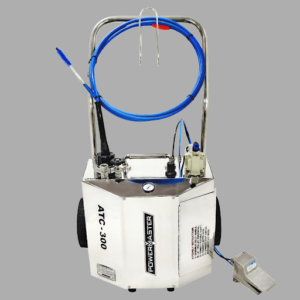
Powermaster has pneumatic tube cleaning systems such as the ATC-300 heavy-duty cleaning machine and the portable pneumatic cleaners. Powermaster's machines are made to accommodate changeable shafts and cleaning tools, variable speeds and torques, and even water flushing. This provides industrial maintenance departments with the ability to select viable solutions depending on the dimensions and needs of the tubes.