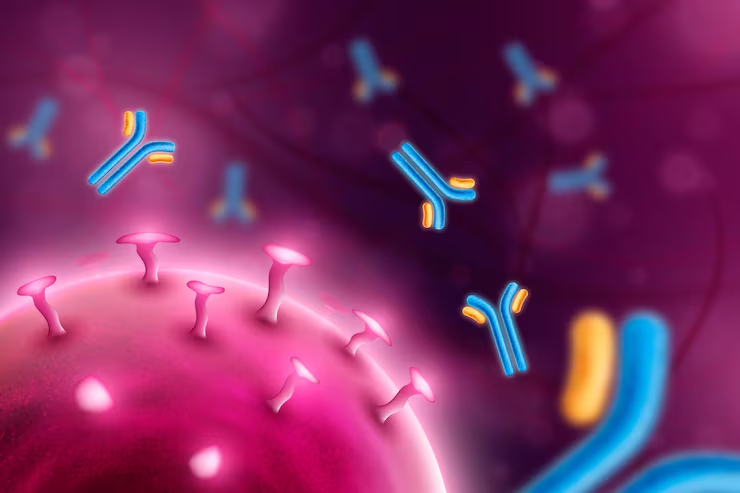
In the intricate circuitry of the brain, inhibitory interneurons play a role that is anything but inhibitory in its scientific significance. Identifying and characterizing these cells relies on molecular markers — among which the calb2 antibody, targeting the calretinin protein encoded by the CALB2 gene, has established itself as an indispensable reagent for neuroscientists worldwide.
This guest post explores why the CALB2 antibody has become a cornerstone of neuroanatomy and circuit neuroscience, examining its biological basis, experimental versatility, and the insights it has helped researchers uncover about cortical inhibition and disease.
CALB2: A Calcium-Binding Protein With Selective Neuronal Expression
Calretinin (CR) is a 29-kDa intracellular calcium-binding protein encoded by the CALB2 gene on chromosome 16q22. Unlike ubiquitously expressed proteins, calretinin shows a remarkably selective distribution: it is found predominantly in a subset of GABAergic interneurons that also express neuropeptide Y or vasoactive intestinal peptide, as well as in retinal amacrine cells, cochlear hair cells, and cerebellar Lugaro cells.
This selectivity is precisely what makes it so valuable. By targeting calretinin with a specific antibody, researchers can unambiguously identify a distinct functional subpopulation of interneurons from the background of thousands of surrounding neurons.
Mapping Cortical and Hippocampal Circuits
One of the most productive uses of the CALB2 antibody is in mapping inhibitory interneuron subtypes across brain regions. In the cerebral cortex, calretinin-positive cells constitute approximately 10–15% of all cortical interneurons. They preferentially target dendrites and spines of pyramidal neurons, providing feedforward inhibitory control over excitatory synaptic inputs.
In the hippocampal dentate gyrus, calretinin labels specific populations of molecular layer interneurons that shape spatial memory encoding. Studies using dual-immunolabelling with markers such as parvalbumin, somatostatin, and calbindin-D28k have enabled researchers to construct detailed interneuron atlases of these regions.
Experimental Applications
Immunohistochemistry
IHC with the CALB2 antibody on brain sections allows brain-wide mapping of calretinin-positive populations. This is commonly performed on free-floating vibratome sections using antigen retrieval followed by biotin-streptavidin or fluorescence-based detection. High-quality staining reveals fine dendritic arbors and axonal projections of labeled cells.
Double and Triple Immunofluorescence
Combining the CALB2 antibody with antibodies against other interneuron markers enables classification of distinct non-overlapping interneuron subtypes. For example, calretinin and parvalbumin are expressed in largely non-overlapping populations, allowing precise quantification of interneuron diversity in healthy and diseased tissue.
Implications for Neurological Disease Research
Loss of calretinin-positive interneurons has been documented in temporal lobe epilepsy, Alzheimer's disease, and schizophrenia. Using the CALB2 antibody, researchers have shown that selective interneuron vulnerability precedes broader excitatory neuron loss in several disease models — suggesting that targeting interneuron maintenance could represent a therapeutic strategy.
Studies in animal models of autism spectrum disorder have similarly used calretinin immunolabelling to quantify changes in inhibitory/excitatory balance across developmental time points.
Technical Considerations for Reliable CALB2 Immunostaining
Obtaining high-quality and reproducible staining with a CALB2 antibody requires careful optimization of tissue preparation, fixation, and imaging parameters. Even highly validated antibodies can produce inconsistent results if experimental conditions alter antigen accessibility or increase background fluorescence.
Tissue Fixation and Processing
Paraformaldehyde fixation is generally preferred because it preserves neuronal morphology while maintaining calretinin antigenicity. Over-fixation can mask epitopes and reduce staining intensity, particularly in human postmortem tissue. Cryosections often provide a stronger signal preservation than paraffin-embedded tissue, although paraffin processing may offer better long-term tissue stability.
Antibody Dilution and Controls
Optimal antibody concentration varies depending on tissue thickness, fixation conditions, and detection method. Excessively concentrated antibodies can increase non-specific staining and obscure delicate neuronal processes. Researchers should always include:
- Positive-control tissue known to express calretinin
- Negative controls lacking the primary antibody
- Species-matched isotype controls where appropriate
Without proper controls, weak background staining can easily be misinterpreted as true interneuron labeling.
Imaging and Quantification
Confocal microscopy is frequently used to visualize calretinin-positive neurons because it enables optical sectioning and accurate reconstruction of dendritic morphology. Quantitative studies should standardize imaging exposure, laser intensity, and threshold settings across samples to avoid introducing measurement bias during cell counting or fluorescence intensity analysis.
Antibody Validation Matters
Not all CALB2 antibodies perform equally across applications. Some antibodies validated for Western blot may perform poorly in immunohistochemistry due to epitope sensitivity after fixation. Researchers should prioritize antibodies with:
- Application-specific validation data
- Knockout-validated specificity
- Peer-reviewed citation history
- Lot-to-lot consistency testing
In neuroscience, poor antibody validation has contributed to irreproducible findings across multiple studies. Careful validation is not optional — it is fundamental to generating biologically meaningful conclusions about interneuron organization and dysfunction.
Conclusion
The CALB2 antibody is more than a simple cell marker — it is a precision instrument for dissecting the architecture and pathology of inhibitory neural circuits. Its ability to reliably label a defined interneuron subpopulation across diverse experimental platforms makes it essential for anyone investigating cortical circuitry, hippocampal function, or interneuron-related disease. As our understanding of inhibitory microcircuit dysfunction deepens, the CALB2 antibody will remain at the centre of that scientific conversation.