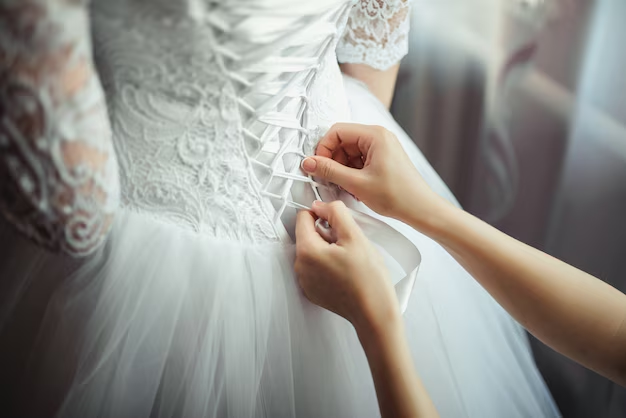
Your wedding dress holds more than fabric and stitching — it holds the memory of one of the most meaningful days of your life. Yet most dresses, if left unattended after the wedding, will yellow, stiffen, or develop stains that become permanently set within a year. The good news is that with the right steps taken at the right time, a wedding gown can remain in near-perfect condition for generations.
Act Quickly After the Wedding
The biggest mistake brides make is waiting too long. Stains from champagne, cake, grass, food, and body oils are largely invisible right after the wedding — but they oxidize over time and turn into yellow-brown marks that can be nearly impossible to remove years later. Ideally, your dress should be cleaned within four to six weeks of the wedding.
This isn't just common advice — it's backed by textile science. According to the American Textile Care Labeling Coalition, sugar-based stains (champagne, juice, cake frosting) become chemically bonded to fabric fibers within weeks of contact, making early treatment critical.
Understand What Your Dress Is Made Of
Before anything else, identify your dress's fabric composition. Silk, satin, chiffon, organza, lace, and tulle all respond differently to cleaning agents and storage conditions. Many dresses are multi-fabric — a silk bodice with lace overlay, for example — which means different areas may need different treatment approaches.
Check the care label if your dress has one. If it says "dry clean only," honor that — attempting to hand-wash or machine-wash a structured gown at home risks shrinkage, warping of the bodice, and damage to embellishments.
Professional Cleaning Is Non-Negotiable
Home spot-cleaning is not a substitute for professional cleaning when it comes to wedding gowns. A professional service will treat the entire dress — not just visible stains — using methods appropriate to the specific fabric. This typically involves a combination of wet cleaning (for water-soluble stains) and dry cleaning solvents (for oil-based marks).
When choosing a cleaner, ask specifically whether they have experience with bridal gowns. General dry cleaners may not be equipped to handle delicate beading, lace appliqués, or structured corset bodices. A specialist in preserving wedding dress fabric understands these nuances and takes the time to treat each section of the gown individually.
Proper Storage Makes All the Difference
Once cleaned, how you store your dress determines whether it looks the same in 30 years or has yellowed beyond recognition. The most important factors are light, humidity, airflow, and the materials your dress is stored in.
Avoid plastic garment bags entirely. Plastic traps moisture, which promotes mildew and causes yellowing. Instead, use an acid-free box lined with acid-free tissue paper. Acid-free materials are pH-neutral, which means they don't react with fabric over time. Store the box in a climate-controlled environment — ideally between 65–70°F with 45–55% relative humidity. Attics and basements, despite being common storage spots, are the worst choices because of their temperature and humidity swings.
Folding and Padding the Gown
Even in an acid-free box, the dress needs to be folded carefully. Every fold creates a crease, and creases that stay in place for years can permanently damage fibers. Pad each fold with loose acid-free tissue to cushion the bend and redistribute stress across the fabric.
Ball gowns with full skirts require especially careful folding. Don't compress the skirt — stuff it loosely with tissue to maintain its shape. Sleeves should be folded inward rather than tucked underneath the body of the dress.
Inspect the Dress Periodically
Even properly stored dresses benefit from an annual check. Open the box, gently inspect the fabric for any signs of yellowing or mildew, and re-fold the dress in slightly different positions to prevent permanent crease lines from setting. Re-stuff with fresh acid-free tissue if the original tissue has compressed.
If you notice any new discoloration or a musty smell, don't wait — take the dress to a professional immediately. These issues are much easier to address when caught early.
Conclusion
A wedding dress is one of the few garments worth preserving with genuine care and intention. The steps aren't complicated — prompt cleaning, proper materials, controlled storage, and periodic inspection — but they must be done correctly to matter. Start early, use the right resources, and your gown will remain as beautiful in memory as it was on the day you wore it.